NTRIP and RTK Coverage Map for Australia and New Zealand
Check the correction coverage available at your farm
Use the map to search for an address, enter GPS coordinates, or select a location directly. VKLink will show the NTRIP RTK correction options available at that position for precision farming and agricultural GPS equipment.
A provider showing coverage does not necessarily offer direct customer access or a receiver-ready agricultural service. See our Australian NTRIP provider and government access comparison.
Check live coverage at your location
Search the live map for your farm, then read the result for the expected correction source, baseline and receiver behaviour at that location.
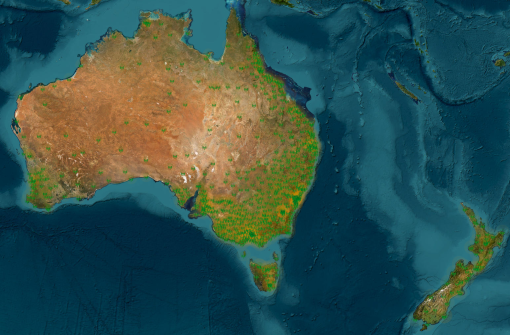
NTRIP and RTK coverage by state and region
The live map includes enabled physical and virtual reference stations serving parts of New South Wales, Victoria, Queensland, South Australia, Western Australia, Tasmania and New Zealand. Station availability and virtual coverage can change, so search the exact farm address or GPS coordinates rather than relying on a statewide coverage claim.
VKLink calculates the available correction options for the selected point when the page loads. Areas outside the current network can often be served by installing a VKLink Additional Reference Point.
Coverage map key
- Purple: acceptable physical-base coverage within a 30 km baseline.
- Magenta: proven fast virtual-base coverage, with recorded startup within 2 minutes.
- Teal: proven extended warm-up virtual-base coverage, with recorded startup between 2 and 15 minutes.
- Grey: experimental virtual-base coverage that is untested, has not started within 15 minutes, or has recorded an output interruption.
- Orange: rough physical or virtual-base coverage between 30 and 45 km.
- Outside the coloured areas: your farm may need a VKLink Additional Reference Point.
Mobile phone coverage
The map includes mobile phone coverage data published by the ACCC and refreshed every three months. Treat it as a guide: reported coverage can differ from real conditions, and tower outages can affect service. The overlay helps indicate whether a VKLink 4G modem is likely to work in the selected area.
Acceptable physical-base RTK coverage: 0-30 km baseline
The acceptable coverage area places your rover within 30 km of an existing physical reference station. This provides:
- Approximately 2.5-5 cm position accuracy.
- Approximately 2.5 cm pass-to-pass accuracy.
- The best opportunity for compatible precision agriculture receivers to obtain and maintain an RTK FIX.
Rough physical or virtual-base RTK coverage: 30-45 km baseline
The rough coverage area places your rover between 30 and 45 km from an existing physical or virtual reference station. This provides:
- Approximately 2.5-7 cm position accuracy.
- Approximately 2.5 cm pass-to-pass accuracy.
- A longer baseline that may cause some receivers to take longer to obtain an RTK FIX.
- A greater chance that some receivers will lose their FIX in difficult conditions.
Virtual reference station (VRS) coverage
VKLink virtual bases are selectively positioned inside a suitable triangle of physical reference stations. There is no GNSS receiver installed at the virtual location. Its correction data is derived from observations collected by the surrounding stations.
Within a 30 km baseline, the map separates proven fast virtuals in magenta, proven extended warm-up virtuals in teal, and experimental virtuals in grey. Rough virtual coverage from 30 to 45 km remains orange.
Virtual coverage provides:
- Approximately 2.5-10 cm position accuracy.
- Approximately 2.5 cm pass-to-pass accuracy.
- Coverage in selected areas that are outside the preferred baseline of a physical station.
- Compatibility with many, but not all, agricultural RTK receivers.
- An initial convergence period. Proven fast virtuals have started within 2 minutes, while extended warm-up virtuals have taken between 2 and 15 minutes.
VKLink Additional Reference Point
A VKLink Additional Reference Point is our Australian-designed, value-for-money option for farms outside existing coverage. It behaves like a physical reference station and appears on the coverage map as a physical base.
An additional reference point provides:
- Approximately 2.5-5 cm position accuracy within the acceptable baseline.
- Approximately 2.5 cm pass-to-pass accuracy.
- Correction data suitable for compatible precision agriculture receivers.
- A reference station positioned where your farm needs it.
- Operation using a reliable internet connection and continuous power supply.
Warming a virtual base before work
Virtual stations need time to converge. If a virtual base is assigned to your account, the VKLink dashboard lets you warm it before starting work. You can start it during your morning coffee, then head out to the machine. A manually warmed virtual base remains available for two hours.
VKLink does not mark a virtual base as ready until its network solver reports that usable correction data is available. This prevents a receiver from beginning work against a virtual station that is still converging, so your lines do not move around the paddock.
Not sure which option suits your farm or receiver? Contact VKLink with your location and equipment details.